
Monday, August 31, 2026


Saturday, August 29, 2026
Big Pharma's Chemical Imbalance Theory of Mental Illness Debunked
I've Been Diagnosed as Trans-Autistic by a Guest Trauma Professional on "The View"...
00:10 Alone at 30 With My Cats
02:04 The Unfalsifiable Trap of 'Masking'
03:35 An Identity, Not a Diagnosis
04:41 There Is No Test for Autism
07:54 Why Boys Were Diagnosed 4 to 1
11:40 The Real Harm of Overdiagnosis
Social camouflaging is a set of conscious or unconscious strategies people use to hide or compensate for neurodivergent traits in order to fit in with social norms. [1]Key Behaviors
- Masking: Hiding traits by forcing eye contact or suppressing repetitive movements (stimming).
- Compensation: Actively copying facial expressions, body language, or speech patterns.
Impacts
Mental Health: Long-term use is closely linked to severe anxiety, depression, and burnout.- Exhaustion: Maintaining this facade requires immense mental and physical effort.
When Social Media Selected Profile Identities Masquerade as Genuine Medical Conditions and Create a Permission Structure for the Self to not Change or Evolve.
DSM-5 Broadened Autism Definitions have Medicalized Social Awkwardness - "It's not me, it's the disease"
The Western Identity Crisis
Gilles Deleuze’s philosophy, intensity is a non-numerical, qualitative difference (such as a degree of heat, pressure, or emotion) that underlies and generates all actual forms and extensions.Key Dimensions of Deleuze's Concept of Intensity
- Difference vs. Extension: Unlike quantities that can be divided and measured in space (extension), intensity cannot be divided without changing its fundamental nature. It is a continuous state of flux and becoming.
- The Plane of Immanence ("A Life"): In his late text "Immanence: a life...", Deleuze describes a pre-personal, pure stream of consciousness or vitality that does not belong to a specific ego or self. This plane of immanence is an open field where shifting intensities and anonymous singularities unfold.
- Connection to Spinoza and Bergson: Drawing from Baruch Spinoza, Deleuze views modal essences and affects as degrees of power (puissance) and continuous variations in intensity. From Henri Bergson, he adopts the idea that the intensive is tied to duration (durée) and internal movement rather than static spatial objects.
- The Intensive Order: In works like Difference and Repetition and Anti-Oedipus (co-written with Félix Guattari), living in the "intensive order" means experiencing the raw, unmediated flow of becoming, free from the rigid structures of common sense or fixed representation.
Friday, August 28, 2026
Tuesday, August 25, 2026
LGB and TQ+ Are Getting a Divorce!
Monday, August 24, 2026
(D) Victims Take GOLD in the Libtard Olympics!


Sunday, August 23, 2026
Kurdistan: The Splintering of Iran

An estimated 8 to 10 million Kurds live in Iran, making up approximately 10% to 12% of the country’s total population. They constitute the third-largest ethnic group in Iran after Persians and Azeris.
Geographic Distribution
The demographic weight of the Iranian Kurdish population is distributed across two primary zones:Religious Diversity
- The Northwest (Eastern Kurdistan): This is the traditional home of Iranian Kurds along the borders of Iraq and Turkey. Their demographic concentration by province breaks down as follows:
- Kermanshah: Contains roughly 30% of Iran's Kurdish population, serving as its largest demographic center.
- Kurdistan Province (Sanandaj): Holds about 28% of the population.
- West Azerbaijan: Accountable for roughly 25% of the population, specifically in its southern and western counties.
- Ilam: Functions as the southern anchor of the region with about 10%.
- The Northeast (Khorasan Kurds): An isolated, sizeable community of close to 1 million Kurds lives in the northeast along the Turkmenistan border. They are descendants of fighters relocated there during the Safavid era to guard Iran's borders against nomadic invaders.
- Urban Centers: There is also a major urban diaspora, with approximately half a million Kurds residing in the capital city of Tehran.
Unlike the Kurdish populations in Turkey or Iraq which are overwhelmingly Sunni, Iranian Kurds are highly religiously diverse and split between major sects:Linguistic Dialects
- Sunni Islam (Shafi'i school): Predominant among the northern and central Kurds, particularly in the Kurdistan Province and West Azerbaijan.
- Shia Islam: Concentrated heavily toward the south in the Kermanshah and Ilam provinces.
- Yarsanism (Ahl-e Haqq): A distinct syncretic religion practiced by a significant minority of Kurds, mostly clustered within Kermanshah.
The Iranian Kurdish community is multilingual; nearly all are bilingual in Persian and their regional Kurdish dialect. The language branches into three main geographic dialects:
- Kurmanji (Northern Kurdish): Spoken primarily by the isolated Khorasan Kurds in the northeast and in the northernmost parts of West Azerbaijan.
- Sorani (Central Kurdish): Spoken widely across the Kurdistan Province and parts of West Azerbaijan, anchoring the cultural literary tradition.
- Southern Kurdish (including Kelhuri and Laki): Spoken primarily in the populous southern provinces of Kermanshah and Ilam
Saturday, August 22, 2026
Affirmative ACTION Time
Friday, August 21, 2026

Wednesday, August 19, 2026
Wanted: Affirmative Action Poster Boys for Assuaging Neoliberal Guilt
His blackness was the crucial factor in his elevation to the pinnacle of academia by whites eager to feel good about themselves and secure that they couldn’t be called racistFor a long time, it was the view from the Left as well as the Right that tokenism was wrong. It was considered disrespectful of black people, i.e., racist, to place us in a position because of the color of our skin when we weren’t qualified for it, or when otherwise we wouldn’t have been wanted there, just for the sake of appearances.But one consequence of what Alexandria Ocasio-Cortez referred to recently as Woke 1 was an unspoken revision of this view: tokenism was now okay. Jason Arday was one of the results of this new perspective.Back in the day, the classic example of tokenism—call it Tokenism 1.0—was giving a black person a visible role but not much in particular to do. Elevating a black person to a role of actual influence, when optics are clearly the main justification, is just as harmful, if not more so. The often-used term of art for this approach is “DEI,” though more straightforwardly, it is Tokenism 2.0.Arday, who was found dead last week amid a maelstrom of revelations about his scholarship and various questionable claims of achievement, hardships, and disabilities, was elevated as a token in the same spirit as the black characters shown on Norman Lear sitcoms that addressed tokenism 50 years ago—Archie Bunker bringing a black man into his lodge to avoid losing its tax break, George Jefferson being invited to join an all-white tennis club just for optics, etc. I don’t sense that Arday was a cynical operator as many have portrayed him. He seems to have been an extreme example of a type: someone who gets a sense of self-worth through exaggerating his hardships and achievements. Most such people live anonymous lives, alternately annoying and entertaining people with their endless tall tales, obviously founded in insecurity.But Arday ended up retailing his fictions in modern academia, a world with a burning desire to celebrate blackness and demonstrate its antiracism. No one is on record having chuckled in the corner that hiring Arday at Cambridge University will “give the place a little color,” in the fashion of the old sitcoms. Nonetheless, it’s impossible to avoid the reality that Arday’s color was the crucial factor in his elevation. His scholarly work was insubstantial, a judgment that would be fair even if it hadn’t turned out to be plagiarized to such a degree. Yet he was granted a Ph.D. (the title of his dissertation has a glaring typo) and several honorary degrees, asked to give various keynote addresses, regularly invited on radio and television, and made the equivalent of a full professor at Cambridge University at 37. It’s inconceivable that a white person would be elevated to the pinnacle of the profession—especially a Cambridge professorship—with such a thin record.Then there was his wildly improbable life story: suffering both a brain tumor and a stroke, yet passing his dissertation defense immediately after recovering from them, despite having lost all memory of what he wrote; suffering from epilepsy, autism, and Asperger’s; not speaking until 11 and not reading until 18; playing championship-level ping-pong despite his many handicaps; being threatened at his Cambridge office by masked, armed men, mysteriously unrecorded by CCTV cameras; discovering that a pig’s head had been sent to his parents; running marathons at world champion-level, including doing so with a leg swollen to twice its size; and so on. Frankly, all of this is so incredible, in the literal sense, that a white scholar making these claims would almost certainly have been instantly dismissed as a fabulist. But Arday was black, and the whites around him considered it more important to be seen elevating him—especially as he was someone claiming past hardships—than viewing his claims as the fables they were.This was tokenism.Arday was not a one-off but part of a trend after Woke 1 in 2020. Consider, for one example, former White House press secretary Karine Jean-Pierre, whose performance in that role for the Biden administration made demonstrably clear that her abilities were not her main qualification. Carolyn Rouse’s bizarrely incoherent interview with the Chronicle of Higher Education made it hard to believe that her being a black woman was not central to her appointment as president of the American Anthropological Association. There have been other prominent cases. I don’t relish calling these things out and will refrain from naming more names, but when someone black is installed in a position where it’s all but impossible not to see that race played a dominant role in their selection, this is what used to be called tokenism. Maybe we can call it “wokenism.”It makes whites feel good about themselves and secure that they can’t be called racists. But it also makes the broader society question the capabilities of any black person in a position of authority or prestige. It encourages a sense that being just so-so is the best that blacks can do.A common rejoinder to this complaint is that when a white person is mediocre, we don’t decide that all whites are mediocre. But the issue is whether blacks are placed in prominent positions beyond their qualifications more often than whites, and with what degree of mismatch. If a white person becomes a Cambridge professor at 37, they have credentials of the wunderkind variety. One example of this was Stephen Hawking. Arday’s credentials, by contrast, involved being black and having a certain stage presence. It’s not surprising that he went along with all of it and even processed questions about the legitimacy of his work as racism, worth reporting to the police. He had been lavishly praised and had gone largely unquestioned and unchallenged for years.But presenting Arday as an exemplar of academic excellence was immoral—both insulting to blacks and cruel to him. Without it, he would have experienced no gruesome public downfall, and he would likely still be alive.Today’s wokenism is no more justified than yesterday’s tokenism. We must face reality. If there are no truly excellent black candidates for a post, giving it to one more white person may feel frustrating—but it is always better than the dehumanizing patronization of naming a token black person.Fifty years ago, this was conventional wisdom. It’s one of those cases where we should heed our elders.

Restoring Arabistan by Liberating the Ahwazi in Khuzestan + adding Bushehr Province to consolidate an oil-rich Emirate

- Population: between 5 and 7 million
- Area: Al-Ahwaz (Khuzestan ) province, 89,000 km2 in the south-west of Iran (although some Ahwazis reside outside of Al-Ahwaz)
- Capital City: City of Ahvaz
- Language: Arabic
- Religion: Islam

- Language: They speak a distinct dialect of Khuzestani Arabic, alongside Persian, which is the official language of Iran.
- Religion: The majority of Ahwazi Arabs are Shia Muslims, though a Sunni minority also exists within the broader community.
- History: The area was a largely autonomous emirate ruled by Arab sheikhs until it was fully integrated into the central Iranian state by Reza Shah in 1925.
- Location: Concentrated in southwestern Khuzestan, sharing cultural and geographic ties near the border of Iraq and the Persian Gulf.
- Grievances: The community has long voiced concerns regarding political marginalization, economic underdevelopment despite local oil wealth, and restrictions on using Arabic as a primary language.
Tuesday, August 18, 2026
Free Sistan and Balochistan (adding Hormozgan Province)!
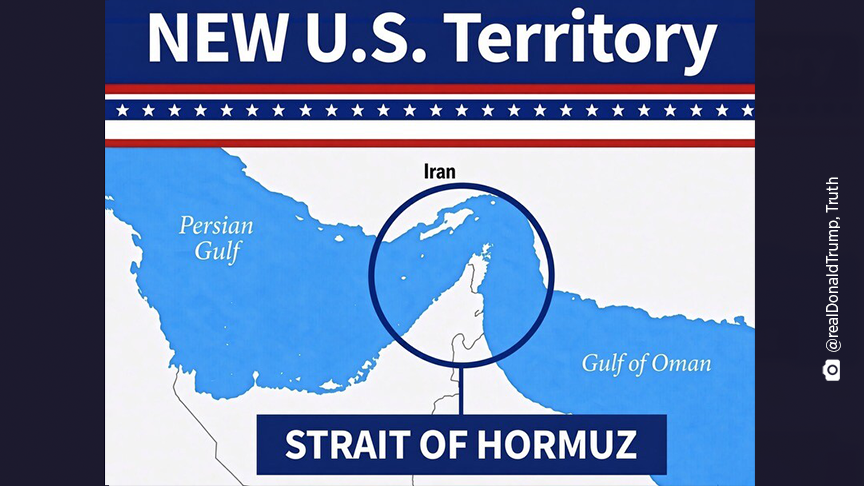

- Primary Region: Sistan and Baluchestan province, running along the borders of Pakistan and Afghanistan.
- Main Cities: Zahedan (the provincial capital), Chabahar, Iranshahr, and Saravan.
- Language: Balochi (Western dialects).
- Religion: Mostly Sunni Muslim (contrasting with the official Shia majority of Iran).
- Mapping Resources: For visual maps depicting ethnic distributions in Iran, geographic references like the Library of Congress Iran Ethnic map or demographic overviews via Minority Rights Group illustrate their heavy concentration in the southeast. [1, 2, 3]

Balochistan and Oman share deep historical, demographic, and geopolitical ties spanning millennia across the Arabian Sea and the Makran coast. These connections range from ancient maritime trade and shared tribal lineages to Omani sovereignty over the port city of Gwadar until 1958.Demographic and Cultural LinksOmani Baloch: An estimated 20% to 30% of the population in the Sultanate of Oman is of Baloch descent. Centuries of migration from the Makran coast have integrated these communities into mainstream Omani society, where they hold prominent roles in civil life, culture, and the military.Military Service: For generations spanning the 18th to 20th centuries, Baloch fighters served as key mercenary and regular security forces for Omani rulers, forming the backbone of early modern Omani military structures.Shared Heritage: Traditional music, dance (such as Chaapi), and linguistic threads remain shared across the coastal regions of Balochistan and Oman due to continuous historical movement across the Gulf of Oman.The Gwadar ConnectionOmani Exclave: The strategic coastal town of Gwadar in present-day Pakistani Balochistan was ruled as an overseas possession of Oman for over two centuries, beginning in the late 1700s.The 1958 Transfer: The Gwadar Purchase transferred sovereignty of the enclave from Muscat and Oman to Pakistan on September 8, 1958, formally ending direct Omani territorial administration in the region
Sunday, August 16, 2026
The Wide and Easy Downhill Road to Dupedom: Fear
Friday, August 14, 2026
Should Leftism be Listed in the DSM?


Vandalizing our World War II Memorial is a despicable attack on a sacred monument honoring the Americans who fought and died for our freedom. Those Americans include my father and grandfather.
This morning, we are filing two felony charges, Depredation Against Property of the… pic.twitter.com/7EQxGWtdue
Thursday, August 13, 2026
It's the Anti-Semitism, Stupid?
Wednesday, August 12, 2026
Black Voter Suppression?

If Republicans were doing this, there'd be a civil rights investigation.
Ahead of the Michigan Senate primary, the media pushed polls claiming that Abdul Mohammed El-Sayed was far ahead of Haley Stevens when it actually out to be a fairly close and narrow race.
Now we had a repeat of that in the Wisconsin gubernatorial campaign where polls were projecting a Hong win by between 18 to 25 when Crowley narrowly defeated her in the actual race.
The pollsters will claim that they ‘dropped the ball’, but these are very similar ‘errors’ involving vast leads being assigned to socialist candidates right ahead of the election. The net effect of these polls was voter suppression against Crowley and Stevens voters who were seen as less motivated and driven than the socialist candidates. It worked in the Michigan race, but didn’t in the Wisconsin race.
It’s easy enough to manufacture such a swing by undersampling black and working class voters, the Stevens and Crowley base, while oversampling white leftists, suburban woke moms, college students and so forth
What that amounts to, ironically enough, is the very thing that Dems and the media accuse Republicans of, black voter suppression.
This is the second Dem primary race in which the pollsters engaged in black voter suppression by oversampling white leftists in an attempt to depress black voter turnout for the non-socialist candidates.
If Republicans were doing this, there’d be a civil rights investigation.But it’s leftists doing this and so it’s treated as some sort of innocent error.
---
Sundance, "Surprise Defeat for DSA Communist Francesca Hong in Wisconsin"
The DSA Communists are claiming election rigging in Wisconsin as Francesca Hong has been defeated by DNC party approved candidate David Crowley.
The current status of the race is Crowley with 39.78% (313,321) and Hong with 39.37% (310,110). Crowley leading by more than three thousand votes

The reason for the apoplexy is that all polling showed Hong with an easy 20-to-25-point lead heading into election day.
State Navigate polling had Francesca Hong +22, Public Policy Polling had predicted Hong +18, Marquette University polling (the gold standard) had Hong +25, then State Navigate polling had Hong +29, and finally Public Policy Polling had another easy win at Hong +20.
Therefore, the only way the DSA Communists can reconcile the outcome of Hong losing is to believe that some other malevolent force was involved in the actual counting of the ballots.
Malevolent force below the fold:
Monday, August 10, 2026
Friday, August 7, 2026

.jpg)
Wednesday, August 5, 2026
Maryland State Democrats Ignore Own Rules and Vote to Disenfranchise 49% of Maryland Voters

A Racial Crossroads, or Wishful Thinking?
American race relations are at a crossroads. In the years since our current racial bargain was struck in the 1960s, our country has coped with its contradictions and imperfections by the very American method of muddling through. That has worked for a long time, but soon it won’t work anymore. We will have to choose between one path and another. There are two reasons for this, and they are unavoidable.
The first reason is demographic. Our racial bargain was made for a country that was biracial and almost 90 percent white. It will no longer work for a country where white people are a minority and the non-white population includes multiple races, including some that were hardly present in the United States when the racial bargain was struck. There were fewer Chinese Americans in 1960 than there are Egyptian Americans today and fewer Mexican-born Americans then than Venezuelan-born Americans now.
For Generation Z, the beneficiaries of our system of racial benefits are no longer a marginal 10 percent of the population. They are a demographic majority. Non-white Zoomers—and, to an extent, white women as well—benefit from both demographic predominance and an explicit or tacit boost in any head-to-head competition with white men, which, in combination, means that affirmative action is no longer a matter of white Americans sacrificing the occasional promotion. It means white men in particular are effectively shut out of many prestigious fields and institutions, especially in the lower rungs.
This is both unfair and unworkable. Unfair, because a white Zoomer does not feel toward the son of an Indian computer programmer or the daughter of a Mexican illegal immigrant the same moral obligation he feels toward the descendant of slaves. Unworkable, because the challenge of making every institution match our national demographics becomes more difficult as our diversity gets more diverse. Diversity used to mean making sure there was a black person in the room. Now it means finely calibrating multiple demographics, which requires putting race at the forefront of personnel decisions.
The second reason race relations are approaching a crisis is that our racial bargain was supposed to be temporary. When the Civil Rights Act of 1964 was passed, it was quickly agreed that some racial favoritism was justified to compensate for the black minority’s unequal starting point. The temporary nature of this favoritism was crucial to the deal. The imperative to treat citizens equally under the law was the moral claim on which the whole civil rights movement was based. Race-based remedies were only “transitional,” promised one chair of the Equal Employment Opportunity Commission, and would “fall into disuse once the job is done.”
At the time, it was sincerely expected that black and white outcomes would converge. A study by the Urban Institute in 1971 extrapolated black progress over the previous eight years and predicted exactly when the catch-up would occur for various metrics such as poverty rates, college completion, and infant mortality. The one that would take the longest, life expectancy at thirty-five years, was predicted to reach white levels in 2019.
In 2003, Supreme Court justice Sandra Day O’Connor famously wrote, “We expect that twenty-five years from now, the use of racial preferences will no longer be necessary to further the interest approved today,” in her decision in Grutter v. Bollinger upholding affirmative action at the University of Michigan. There were a handful of conservatives at the time who would have told her that this was optimistic, based on the available data, but these voices were marginalized as politically incorrect. The conventional wisdom was with Justice O’Connor.
Today, two years away from Justice O’Connor’s twenty-five-year deadline, the conventional wisdom has changed. Everyone can see that the long hoped-for convergence has not materialized. Affirmative action is still necessary to achieve colleges’ desired racial diversity. We have created a black middle class, but blacks from wealthy households on average still have lower SAT scores and lower credit scores than whites from poorer households. Large disparities in violent crime rates still persist, as do disparities in wealth, in part because houses in black neighborhoods still have persistently lower home values.
Both the left and the right have registered the stubbornness of these racial gaps. The recent popularity among liberals of radical authors such as Ibram X. Kendi, who proposed an amendment to the US Constitution prohibiting “racial inequity” and a new government agency to implement it, was a symptom of this disillusionment. As equality of opportunity recedes as a plausible goal for the civil rights regime, having failed to arrive after three generations, there is a growing market for pessimists like Kendi who want to shift the goal to equality of outcome.
So that is the situation we face: The old racial bargain is breaking down, due to a combination of changing demographics and a dawning realization that racial outcomes are not going to converge any time soon. One possible path forward is to throw out the old racial bargain and establish a new one based on equality under the law. The other possible path is to accept permanent racial favoritism at every level of society.
“The old racial bargain is breaking down.”